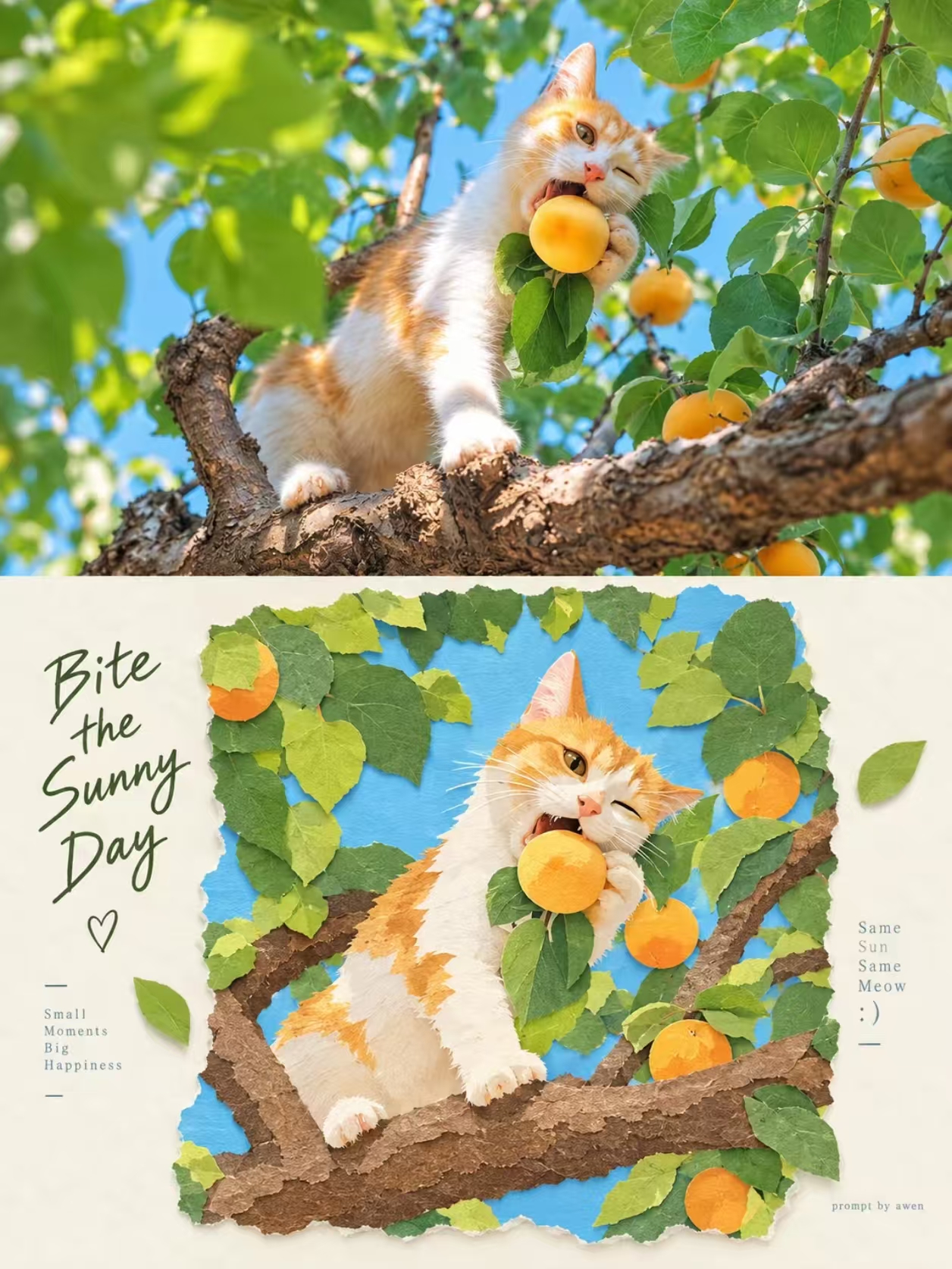
Layered paper-cut split poster
Preserve one photograph above and reinterpret its most recognizable subject below as a sparse tactile paper-cut collage.
 01 / 06
Recipe typeFULL SKILL
Ratio3:4
Execution5 stages
Version1.0.0
SourceGitHub
01 / A photo-to-paper-cut poster recipeFULL SKILL · 1.0.0
Keep the photograph. Rebuild its echo in paper.
One 3:4 poster keeps the source photograph in the top half, then distills the same subject and scene into a small tactile paper-cut composition below.
5stages
7quality checks
1correction attempts
Preserve one photograph above and reinterpret its most recognizable subject below as a sparse tactile paper-cut collage.
03 / Prompt
Create one independent 3:4 portrait poster from one supplied source photograph. Never combine multiple uploads.

Scene notes: {{scene_notes}}
Optional title override: {{title}}
Optional editorial copy override: {{supporting_copy}}
Source photograph: {{reference_image}}

Divide the poster horizontally at exactly 50% height. The upper half is a continuous photographic panel. Preserve the original subject identity and count, shape, proportions, pose, direction, composition, perspective, environment, material, lighting, depth, and natural colors; apply only subtle photographic grading. Add no text, illustration, sticker, or decoration to this half.

If the source photo does not fit the 3:2 upper panel, extend only the immediately adjacent existing environment naturally. Never stretch, warp, move, replace, mirror, or materially crop the subject or change the setting. Do not invent distinct objects.

In the lower half, use this same photograph as the sole story source. Keep its most recognizable subject, silhouette, structural flow, action direction, spatial relationship, emotion, and visual metaphor. Simplify incidental surroundings rather than tracing every object, so the lower illustration clearly corresponds to the photograph at a glance.

Use a handmade layered paper-cut / cut-paper collage / paper-relief language with 2–6 overlapping paper layers. Keep the focal subject small and clear with abundant clean negative space. Use a light cream, ivory, warm-grey, or off-white paper base, then derive 2–5 softened but distinct colors from the source image. Let the source determine the palette; do not force a fixed scheme.

Show irregular cut edges, visible paper fibers, slight misalignment, naturally lifted paper edges, and soft contact shadows. Simplify eyes, fur, clothing, windows, branches, and foliage into only essential cut shapes or openings. Keep the work tactile, quiet, and editorial.

A short title and sparse editorial copy are optional. Preserve user overrides exactly; otherwise derive only brief non-factual wording from the subject, place, action, or mood. Use fine restrained type in safe negative space and omit it if it would cover the subject or become illegible.

Use the six supplied gallery posters only as references for paper craft, palette handling, 50/50 division, and restrained editorial composition. Do not copy their subjects, text, watermark, or exact layouts into a new poster. Return one clean finished poster only.
04 / Negative prompt
No multi-photo collage, merged uploads, unequal split, third band, text or decoration in the photo half, stretched or warped photo, moved or replaced subject, changed setting, invented objects, object-by-object tracing, busy full background, small unreadable focal subject, fixed palette, muddy grey or fluorescent colors, Q-style cartoon, anime, realistic 3D, plastic model, smooth vector finish, cheap children's craft look, long text, slogan, logo, signature, watermark, border, or UI.Recipe typeFULL SKILL
Aspect ratio3:4
IntensityHigh
Version1.0.0